Introductions: Lausanne IV Global Congress
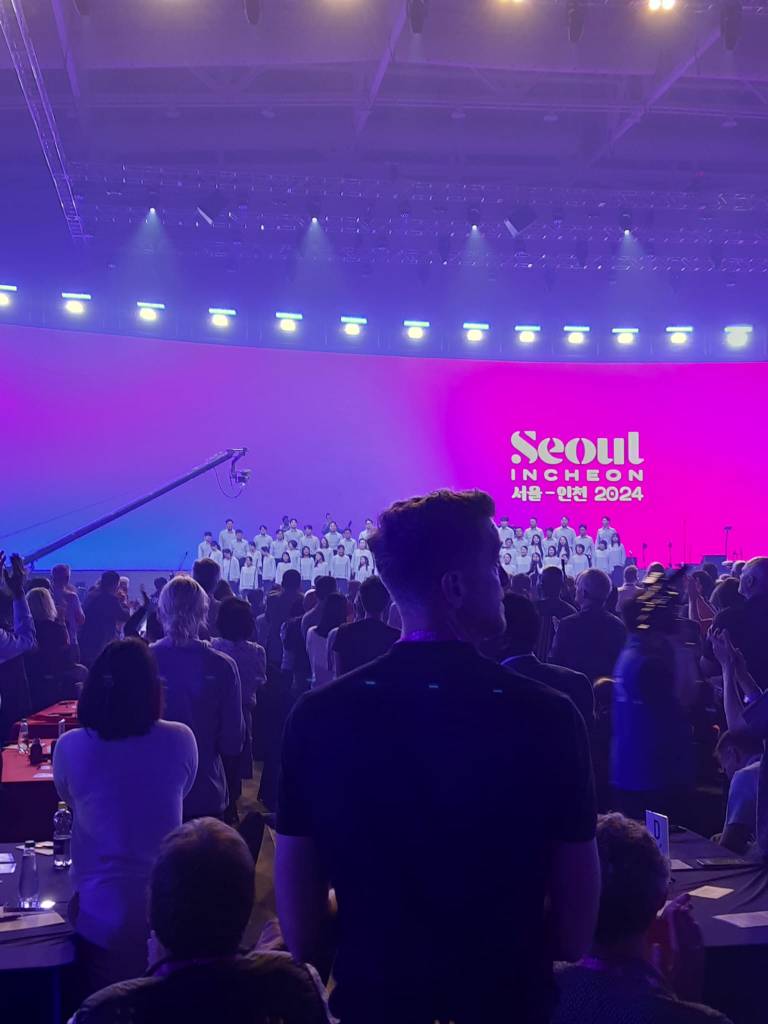
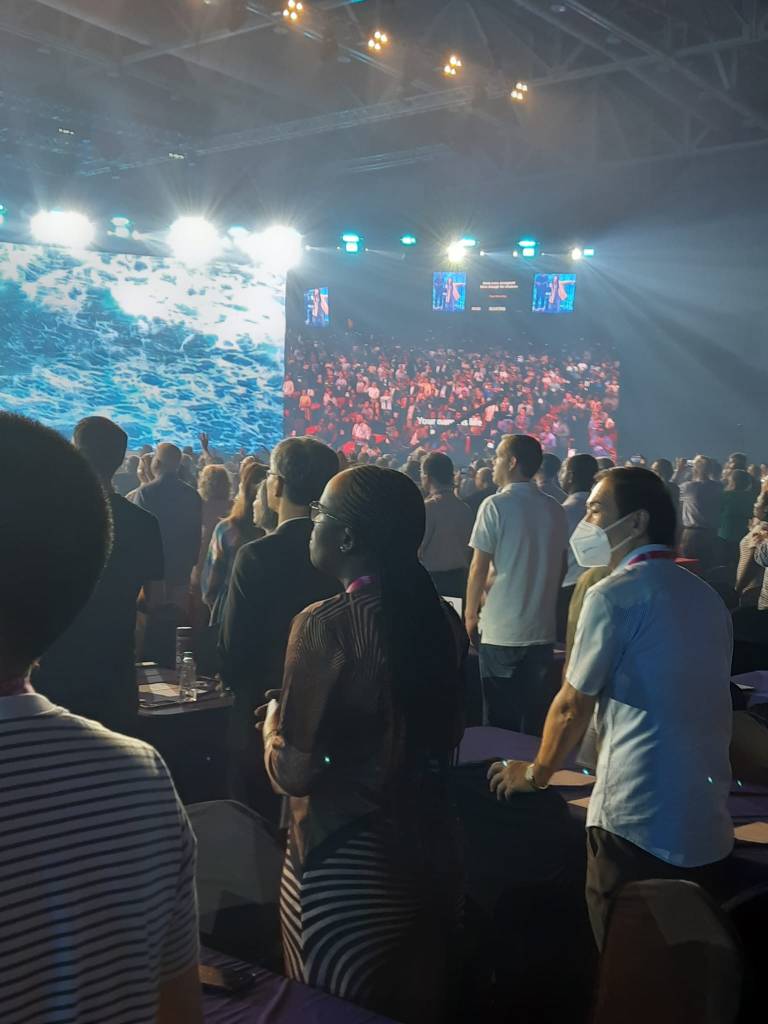
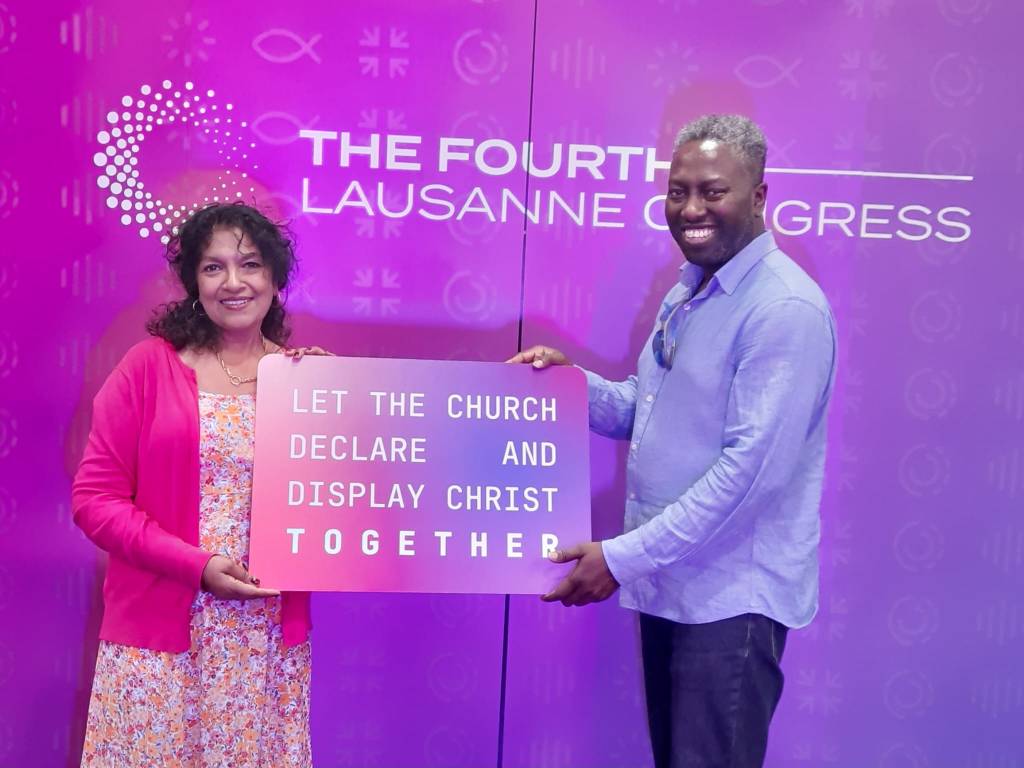
I am one of the 5000+ participants at the Lausanne IV Global Congress taking place in Seoul in South Korea exploring the theme of collaboration. It has been mind blowing to experience a representation of God’s multicultural, intercultural, intergenerational, interdenominational church on earth through this conference. I have met people from different nationalities drawn from different regions, continents, contexts and culture. This international experience of the global church has also been reflected in the shaping and delivery of the programme content including worship, Bible exposition, plenary sessions and discussion groups. The worship for example has used a South Korean choir, a Singaporean Christian artist, Irish Christian worship leaders. Speakers and people leading on the platform include people from different continents, different nationalities, regions, cultures and ethnicities.
As we continue to experience perhaps a little of God’s kingdom on earth, the discussion group (Gap 19 people on move) that I am involved in have raised an issue around people on the move that resonates with an area of inquiry that I have been researching and have lived-experience. This is in migration trauma that many migrants continue to live with on a daily basis. This was mentioned by Kaitlynn Martin, a registered Psychotherapist who lives in Canada in one of our group discussions on people on the move. Migration trauma resonates because of my own lived experience as a missionary migrant in the UK who is working at the intersection of unity, mission and justice. It resonates because of the experience of being othered in a society that is not fully accepting of migrants. It resonates because of how sometimes the church have also contributed towards traumatic experiences of migrants. It resonates because of seeing the multiplicity of suffering that migrants go through. But a question I am asking myself as we continue these discussions is, how can we move from migration trauma to what I am describing as intergenerational legacy that sees migrants in any communities around the world contributing towards an enduring legacy that challenges stereotypes but also adds a lasting impact to the host society for generations to come? Is this something possible? Below is an attempt to chart what this journey could look like!
Migration Theology: Hermeneutics of Migrating Witnesses
Migration continues to be one of the most contested issue of our time. Migration in different western countries has been politicised meaning it is an issue that divides families, societies and government and governmental policies. But lets not think that migration is a western phenomenon, that is, people moving solely from the Majority World (Africa, Asia, Latin America, Oceania) into western world (Europe and North America as an example). People are moving from western world into Majority World contexts although the factors and reasons might be different. In essence, migration is not just an African thing or an Asian thing but a people thing! Migration is not also a new phenomenon as we sometime think, but is as old as humanity. People have been moving since the dawn of civilisation, but what is crucial now in the light of Christian thinking is a re-understanding of migration and its intersection with mission. From this perspective, the Bible becomes a sacred text book on mission and migration because from Genesis to Revelation we can see God’s redemptive history unfold through the hermeneutic of migrating witnesses. In this hermeneutic framework, Abraham’s story shed’s light on God’s salvation revelation through Abraham as a migrating witness. Joseph’s story becomes that of a migrating witness in Egypt through forced displacement and trafficking. The story of Joseph actually exemplifies someone who journeyed from migration trauma towards intergenerational legacy because he went from been a victim to becoming a preserver of community for generations to come (Genesis 50:20 encapsulates Joseph’s understanding of this). The story of Ruth can be read in the light of a refugee witness who was faithful to Yahweh despite adversity and Christians in the New Testament can be understood as migrating witnesses who are on a pilgrimage seeking for a heavenly citizenship.
Polycentric Migration
There are different types of migration. There is international migration in which case people move from one continent to another or from one country to another. There is local migration which could take place within a particular country or region. This means migration today is polycentric not necessarily having one centre but is happening simultaneously in different countries, regions and continents involving different people for different reasons. Migration can also be voluntary or forced and this speaks into the different reasons why people migrate or move. Current conversations within society and church tends to focus on the negative reasons of why people are on the move and this is rightly understood given the context of modern migration. These reasons include crisis such as climate disasters, religious persecution, famine, war, economic instability, political instability, security and so on (This is not an exhaustive list!). These reasons has led to how we conceptualise people on the move or how they are described. This has led to terms such as refugees, that is people seeking refuge for security reasons and emergency reasons, asylum seekers, that is, people seeking asylum perhaps because their refugee status has not been confirmed. Another term used to describe local or regional migration is internally displaced people, that is, people on the move because of security or disaster in a country or region, but have not left their country or a region. Another is economic migrant, that is, those who are on the move because they are seeking better future either because of political or economic instability in their own countries. Some international students will fall into this category while others will not. This is because there are international students whose families are not necessarily suffering but have the financial means to sponsor their children in foreign schools and universities.
Migratory Trauma
What is crucial with these terms is that they reveal to us varied trauma that accompany migration. Some migrants carry this trauma with displacement, family dislocation, fragmentation of identity, loss of property, loss of life and fragility. Others carry this trauma with racism, xenophobia, lack of hospitality, lack of welcome, lack of belonging, discrimination and suffering. Yet others carry this trauma with on-going mental health issues, health problems and intergenerational trauma as a consequence of racism. Some of the challenges migrants have to go through in crossing the border, whether that is through strict visa processing and monitoring, or physically crossing the border on boats, or scaling border and security walls are quite difficult to imagine but is real. This description also speaks to legal and illegal migration of which illegal migration is becoming a challenge for many western societies as they seek to tighten borders in order to tackle the problem. If migration trauma does exist because of the existential realities of people on the move, how can the church address this problem? How can the church participate in charting a trajectory that leads from trauma to intergenerational legacy? I want to offer three thoughts that can help on this journey. One is the notion of Nomadic Theology and Heavenly Citizenship, a second is understanding the concept of migrating witnesses, and lastly is developing an intercultural ecclesiology.
Nomadic Theology and Heavenly Citizenship
New Testament theology is replete with writers such as Peter, Paul , James and the writer of Hebrews describing Christians in migratory terms such as diaspora, strangers, sojourners and pilgrims.
James, a servant of God and of the Lord Jesus Christ. To the twelve tribes scattered among the nations (James 1:1, NIV).
Peter, an apostle of Jesus Christ. To God’s elect, exiles, scattered through out the provinces of Pontus, Galatia, Cappadocia, Asia and Bithynia (1 Peter 1:1, NIV).
But our citizenship is in heaven, And we eagerly await a Saviour from there, the Lord Jesus Christ (Philippians 3:20, NIV).
By faith he made his home in the promised land like a stranger in a foreign country; he lived in tents, as did Isaac and Jacob, who were heirs with him of the same promise. For he was looking forward to the city with foundations, whose architect and builder is God (Hebrews 11:9-10, NIV).
This rich biblical theology around God’s people being described as temporary residents is akin to the Old Testament nomadic culture of the patriarchs moving around in tents seeking God and provision (Genesis 12; 26). It is therefore no surprise that the writer of Hebrews in describing the faith of Abraham put it in the context of nomadic culture. Another way, this functions in the Old Testament was through the various forced migrations through the exile of the community of Israel so that Daniel and the Hebrew boys became migrating witnesses in Babylon and Esther in Persia. The New Testament usage of the scattering of God’s people due to persecution and the notion of a transnational identity in a heavenly citizenship as Paul articulated in the text in Philippians are powerful imagery that conveys that all Christians are migrants seeking a heavenly citizenship. In essence, we are temporary residents in this cosmos representing as ambassadors God’s intercultural kingdom. If all Christians are temporary residents theologically, the implication is that this has to shape how we engage and practice hospitality and welcome to migrants in our various countries. A nomadic theology of people on the move should inform and shape our practice and advocacy on migration. This will begin to mitigate against migration trauma and help the church to speak prophetically into migratory issues. It will mean engaging in migration justice as part of our discipleship calling.
Migrating Witnesses: Marks of Witnesses
A second point is due to the existential realities and complexities around migration, migration today as noticed is described in terms that captures the trauma and struggles of people on the move. The danger however is that , migration can therefore be viewed as a negative drain on the economy and resources of the host countries and societies and therefore a contested issue. Therefore, how can migration be viewed from a Christian perspective that shifts the language from one of receiving to one of giving and contributing? If western societies for example, perceive migration as a drain on resources , how can the church be counter-cultural and give a different perspective on migration? This is why it is important that our churches recognises missionary migrants or better still migrating witnesses whom God appears to be sending because they bear marks of witnesses. Paul describes his ordeal in the letter to the Galatians (Galatians 6: 17) as bearing in his body the marks of suffering for the cause of the gospel of Jesus. Migrating witnesses in the form of people of faith who are refugees, asylum seekers, economic migrants bear marks of witnessing through their migratory trauma that is crucial for mission in western societies. The church can demonstrate a positive view on migration by intentionally using the language that gives new meaning to migration and by also welcoming reverse missionaries and missionaries coming from the Majority World.
Intercultural Ecclesiology

Lastly, if we are going to move from migratory trauma to intergenerational legacy that captures the impact and contributions of migrants for the next generations, we need an ecclesiology that recognises their humanity. This will mean some churches will journey from single culture ecclesiology (monocultural churches) to multiple culture ecclesiology (multicultural churches ) towards an intercultural ecclesiology that centres mutual learning and integration (intercultural churches). Contexts, regions, history and culture will mean intercultural churches will look different in different places, but what is crucial is that an intercultural church helps to develop the agency of people on the move who are on the margins of society, and empowers them to fulfil their God-given visions and aspirations that will benefit generations to come leaving a lasting impact!
 Centre for Missionaries from the Majority World