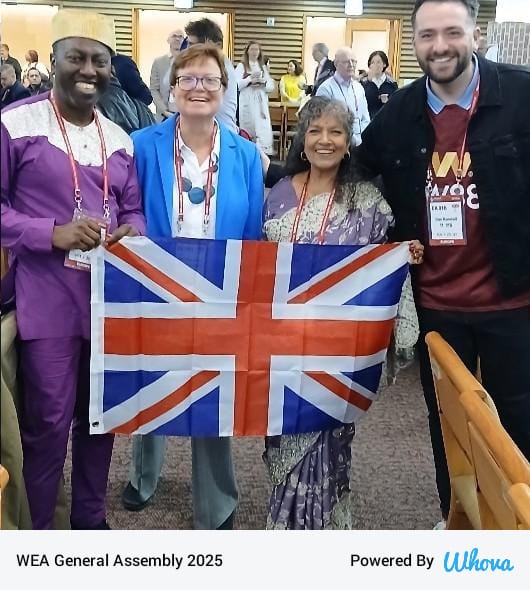
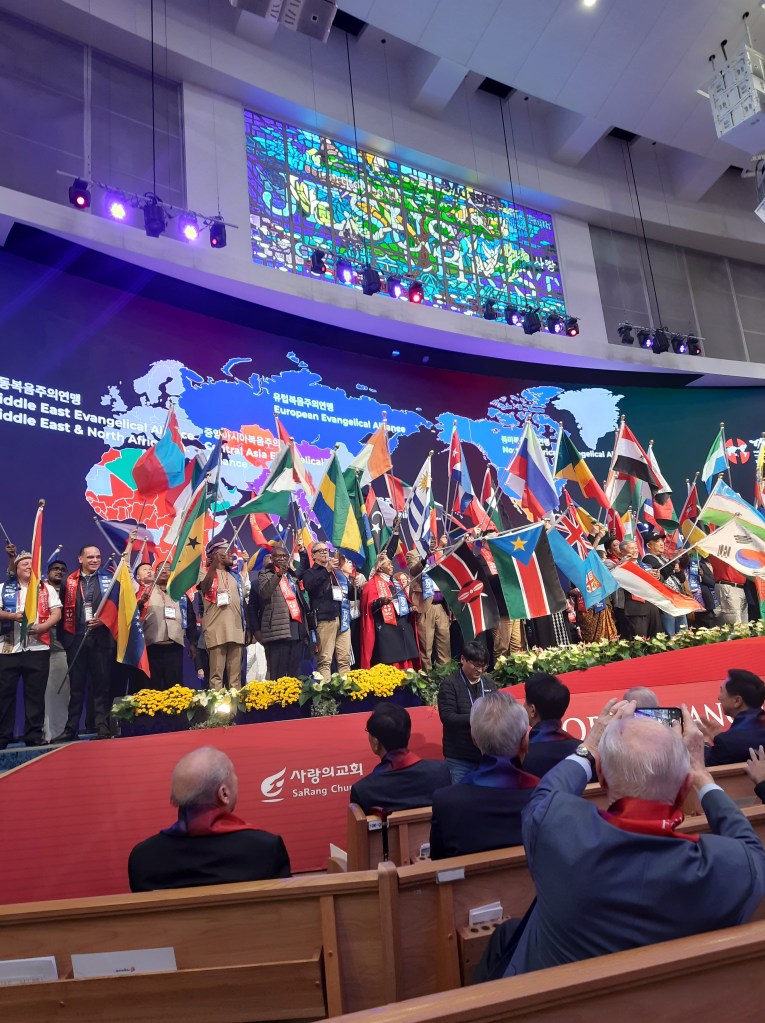
The World Evangelical Alliance (WEA) General assembly in Seoul South Korea gathered altogether around 7000 delegates from 124 countries representing 161 nations of the world. The theme of the gathering was: The Gospel For Everyone with a specific mandate for this to be achieved by 2033. This was a significant gathering for several reasons. At this assembly, the first Arab evangelical Christian of Palestinian origin was commissioned as the Secretary General to lead the global movement of evangelicals. Botrus Mansour is a Palestinian Christian who lives in Nazareth in Israel therefore confirming that something good can indeed come out of Nazareth! This gathering was also important because it reflects the various dynamics of World Christianity at play. Firstly is the representation of speakers from all over the world through the main plenary sessions, panel discussions, workshops and special interest groups. Secondly is the multisite nature of the assembly. There was the general assembly with around 850 delegates, but there were other gatherings connected to this assembly that makes it unique and problematic at the same time. There was the Korean National Pastors’ Conference with around 5000 South Korean Pastors and missionaries in attendance. Alongside was the gathering of Christ Over Africa, Asia and Latin America (COALA), there was the East meet West conversations, Global Collaboration Strategic Forum and diaspora symposium. In essence, there was something for everyone in attendance. It was fascinating to see some of these gatherings happening in parallels with different specialised subjects. On occasions some of the gatherings happen separately to allow people to attend specialised subjects. The multisite nature of this year’s general assembly was made possible by the multisite mega church model.
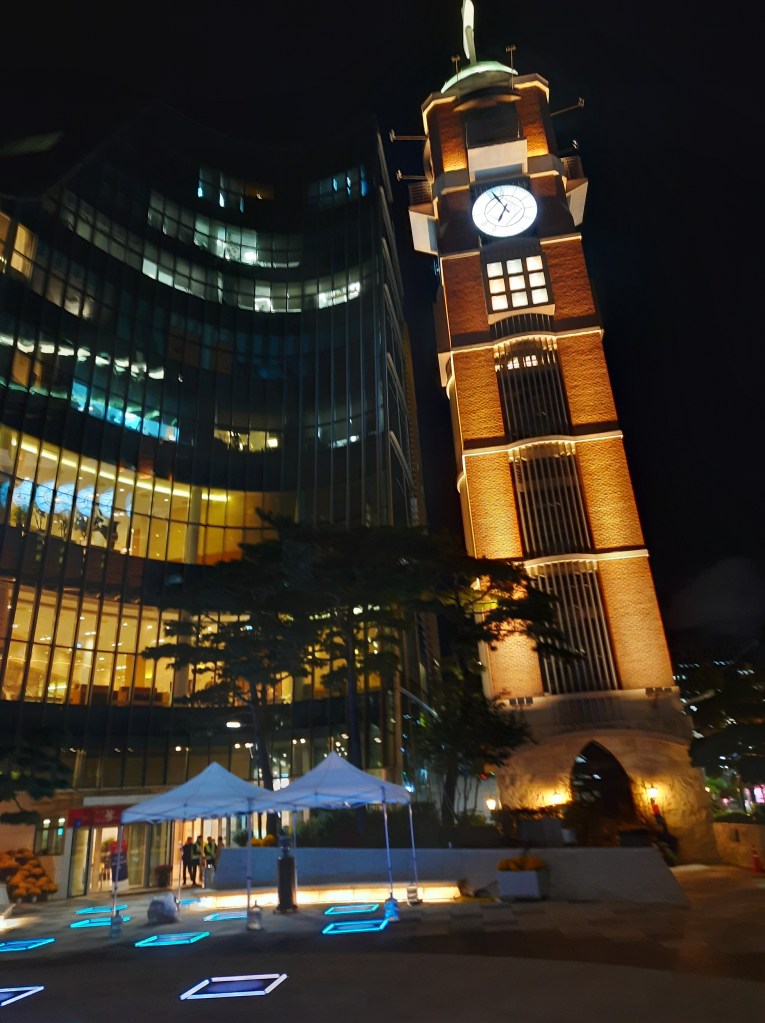
SaRang Church was the host church and was founded in 1978 as Gangnam Eunpyeong Church. Over a period of time, the SaRang Church has grown to become one of the mega churches in the world with a multisite facility. SaRang Church was also supported by Yoido Full Gospel Church as co-partners in organising the assembly. Yoido Full Gospel Church is another mega church in South Korea. The growth of the south Korean church means that it has over the years developed what I will describe as Mega Christianity expressed through church growth, discipleship and visible Christianity. Whilst Mega Christianity is more expressed in the Majority World (Africa, Asia and Latin America) due to the explosive growth of Christianity in those parts of the world, is however not limited to those contexts. We can also see this expression of Christianity in North America and Europe. It must also be mentioned that the size of mega churches in each region is different. In Africa for example, mega churches and gatherings are in the range of hundreds of thousands, in the UK they are usually peaking around tens of thousands and those will be special events rather than churches. Mega churches in the UK will be around 5000. Mega churches and the Christianity that they express are not perfect and there are several people and scholars who will critique them for lack of effectiveness around belonging, discipleship making and growth. But there are equally mega churches that are making and growing disciples in a very intentional manner therefore, the Mega Christianity model of church cannot be stereotyped as not effective.
The collaboration between World Evangelical Alliance and SaRang Church in co-creating and collaborating in organising the assembly is an important one. Important because too often global movements, mission movements and global church networks are distanced from the local or national churches they claim to represent or serve. Global mission movements most of the time because of convening powers usually don’t collaborate or work with local or national churches. The former tend to dictate the terms of partnership and engagement. But in the case of World Evangelical Alliance and SaRang Church, a lot of compromises although some very challenging and complex, had to be made in order to deliver a general assembly. Despite, its complicated problems and challenges, is this model of partnership the way forward? Another, important aspect of this partnership is what it models between a western global movement and a mega Church from the Majority World. Again, this has its complications around power dynamics, organisational structure, planning, logistics and culture, but in my opinion, the co-creation and collaboration between SaRang Church and WEA models what I will describe as global intercultural unity despite its imperfections and headaches. Dr Usha Reifsnider, one of my colleagues suggested that perhaps this collaboration is best defined as global multicultural unity that needs developing towards a global intercultural unity. The key here is that this collaboration still requires attention to head towards a place of deeper relationship and trust.
If the partnership between World Evangelical Alliance and SaRang Church serves as an example of collaboration between national church and global church movement, between western mission movement and mega church from the Majority World. A mega church hosting a global church movement gives us the idea to imagine different possibilities of collaboration. Imagine briefly, the next WEA general assembly in six years’ time being hosted by The Redeemed Christian Church God (RCCG) at their redemption city in Lagos Nigeria. Although that would have all sorts of complications such as visa restrictions for some attendees among other things. Imagine Saddleback Church in California hosting the next assembly or Kensington Temple in London hosting the next general assembly. If this is done by some at a local and national, could it also be replicated at a global level?
SaRang Church and its co-partner church, Yoido Full Gospel hosted the general assembly gracefully through their dedication, hospitality, professionalism, welcoming, finances, logistics, organisation and publicity. This was amidst sacrifices and pressures of other expressions of Korean Christianity not wanting SaRang Church to host this global event due to perceived understandings that western and ecumenical Christian bodies are not preaching the authentic gospel. There were several people with placards outside SaRang Church protesting and demonstrating.

There are several challenges with such a model of partnership but one that I observe in this assembly is around women in visible leadership roles. The plenary sessions, Bible expositors, panel discussions, workshops and special interest groups had women participating, but the challenge was that they were still in less numbers compared to their male counterparts. Overall, there were more male speakers than women. We also had lots of women as the work force welcoming us, looking after us and providing hospitality and comfort, but yet their voices were minimal on the platform. It was good to have Dr Seble Daniel doing the first Bible exposition and setting the context, Professor Wanjiru Gitau expounding on the important role of African Christianity and others speaking however, it was equally frustrating that when the new International Council were elected, all the nine evangelical regions selected men that it became very awkward and was pointed out by a woman in the proceedings. This was quickly corrected with additional nominations and elections of women to add to the Council. Women are the workforce behind many of the successful mega churches around the world therefore very important that their role is not reduced to only serving behind the scenes, or omitted in significant nominations and roles. One could argue in one sense that women are indeed the work force of mega Christianity yet, majority of our mega churches are led by men. This is partly theological for some, whilst for others it is culture and tradition. Whatever the barriers, its seems to me that women in ministry and mission is crucial to the continued growth of World Christianity and definitely to the explosive growth of Majority World Christianity.
In concluding, the World Evangelical Alliance general Assembly in South Korea was a success in several respects reflecting some current shifts in World Christianity but this success is not without its challenges around global intercultural collaboration and the visibility of women in certain aspects of the assembly.
 Centre for Missionaries from the Majority World
Praise God! So thrilling to read about the Church world wide moving forward together!
LikeLike